

Table of Contents
- Why Graphic Tee Prints Crack (and How to Spot Trouble Early)
- How to Wash Graphic Tees Without Cracking the Print
- How to Dry Graphic Tees So the Ink Stays Intact
- How to Prevent DTF Prints from Cracking
- How to Fix a Cracked T-Shirt Print
- Care by Print Method: Screen Print, DTG, DTF, and Heat Transfer
- Storage, Everyday Wear, and Care Labels
- Conclusion
- Frequently Asked Questions
Last Updated: October 20, 2026
Why Graphic Tee Prints Crack (and How to Spot Trouble Early)
Learning how to prevent graphic tee prints from cracking starts with understanding why they fail. At MobiusLDG, our art-inspired designs are meant to stay vivid.
Print cracking is the splitting or flaking of ink where it bonds to fabric. It rarely happens overnight. Most damage builds up slowly through heat, friction, and harsh washing.
The Four Forces Behind Print Cracking
Four things break down a printed shirt design over time:
- Heat: Hot water and high dryer settings soften the ink layer, so it loses its grip on the fabric
- Friction: Tumbling in the dryer and rubbing against other clothes wear down the print surface
- Stretching: Pulling a shirt over your head or wringing it out can stretch the ink past its limit
How to Wash Graphic Tees Without Cracking the Print
The safest way to wash graphic tees is cold water, a gentle cycle, and mild detergent, with the shirt turned inside out, a routine that protects almost any printed shirt.
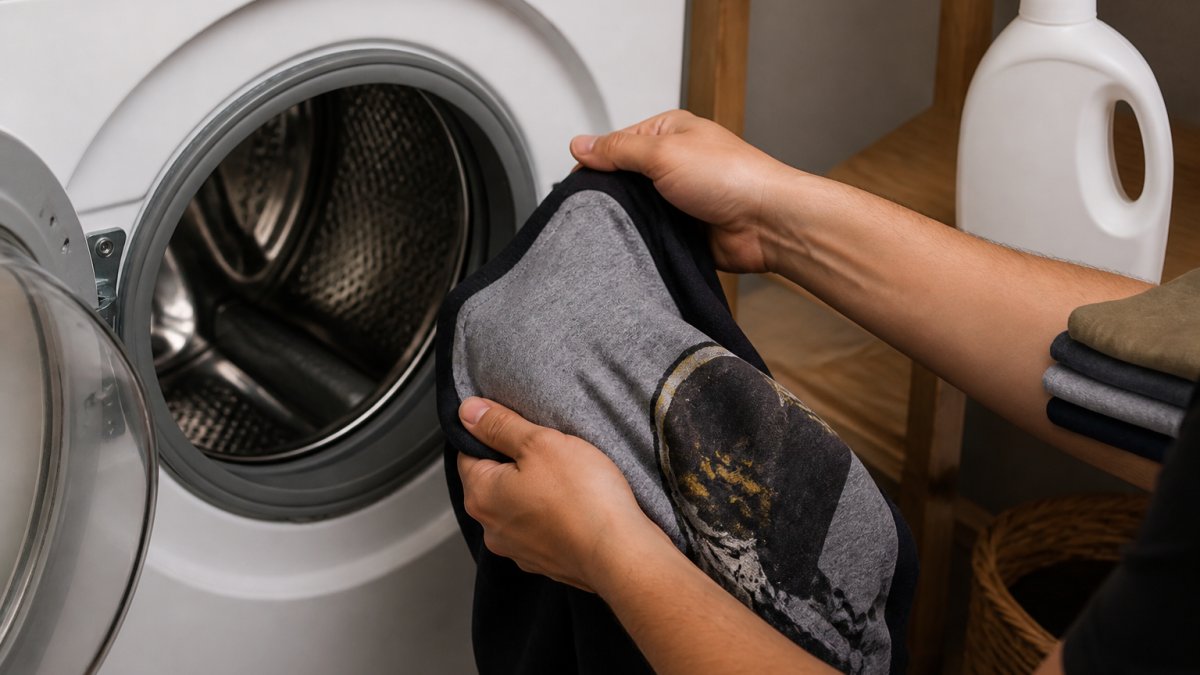
Follow these steps:
- Turn the shirt inside out so the print faces inward
- Use cold water only
- Select a gentle or delicate cycle
- Add a small amount of mild detergent
- Skip bleach and fabric softener
- Wash with similar colors, not heavy items like jeans
Temperature, Cycle, and Detergent Choices That Matter
Cold water is the single most important setting. Hot water relaxes the ink and speeds up fading and cracking.
Mild detergent cleans without stripping the print. The American Cleaning Institute's laundry guidance notes that matching detergent and water temperature to the fabric helps clothes last longer.
For tougher stains, spot clean by hand instead of reaching for bleach, which breaks down the ink bond and can discolor the design within a few washes.
How to Dry Graphic Tees So the Ink Stays Intact
Air drying is the best way to dry graphic tees: hang the shirt inside out on a line or rack, away from direct sun, and skip the dryer whenever you can.
If you must use a machine, choose the lowest heat setting and remove the shirt while it's still slightly damp. Tumble drying on high heat is a leading cause of print cracking and peeling.
What Actually Happens Inside the Dryer
A dryer attacks a printed shirt two ways at once. Heat softens the ink and the adhesive holding it to the fabric, while the tumbling drum lifts and drops the shirt, flexing the softened ink with every impact.
"Low heat" is not a complete answer: a 60-minute low-heat cycle still means sustained warmth and hundreds of flex cycles. Pull the shirt out while damp and finish it on a rack to cut both heat exposure and tumbling time.
- Hang dry inside out to protect the print from sunlight
- Avoid hanging a wet shirt by the shoulders, which can stretch the neckline
- Never iron directly over the print; use a pressing cloth or parchment paper if needed
Dryer Settings and Sensor Behavior
Most modern dryers offer a moisture-sensor setting rather than a fixed timer. Sensor drying stops when the exhaust air reaches a target moisture level, so it usually means less heat exposure than a timed cycle, the better choice for printed shirts.
A few practical settings matter more than the label on the dial:
- Low or tumble-dry low keeps the drum temperature down; high heat is the setting most associated with cracked and peeled prints
- Permanent press often includes a cool-down period at the end, which reduces the final heat spike
- Timed dry is the riskiest option because it keeps running whether or not the shirt is already dry
Separate printed tees from towels and jeans: heavy items hold moisture longer and keep the dryer running, extending the shirt's exposure to heat and friction.
Drying by Print Type
Drying risk varies by print method, and the dryer is where the differences show up most.
-
Direct-to-garment (DTG) soaks ink into the fibers, so it is less prone to flaking but can fade faster under repeated heat
-
Hang dry inside out, away from direct sun
-
Use the moisture-sensor setting if you machine dry
-
Pull shirts out while slightly damp and finish on a rack
The U.S. Department of Energy's appliance guidance points out that dryers use significant energy, so air drying saves money and protects your printed shirt at the same time.
How to Prevent DTF Prints from Cracking
DTF prints need extra care because the transfer film and adhesive layer are more heat-sensitive than screen print ink. Cold washing and air drying are essential for how to prevent DTF prints from cracking.
Alebrije Dog Unisex Jersey Short Sleeve Tee →
DTF, or direct-to-film, bonds a printed film to fabric with heat, and that bond weakens with repeated high heat. Wash DTF shirts inside out in cold water and never tumble dry on high.
- Wait at least 24 hours after the first wear before washing a new DTF shirt
- Avoid stretching the print when pulling the shirt on or off
- Store DTF shirts folded, not hung, to reduce stress on the print edges
Why DTF Fails Differently Than Other Prints
Most care guides give one set of washing rules for every printed shirt. That advice is safe but imprecise, because the common print methods fail in different ways and at different points. Matching care to the print method is where printed shirts actually get ruined.
| Print Method | How the Image Bonds | First Failure Sign | Highest-Risk Care Step |
|---|---|---|---|
| Screen print | Thick ink cured onto the fabric surface | Cracks along the fabric grain | Hot dryer and stretching |
| DTG | Ink sprayed into the fibers | Overall fading and dulling | Harsh detergent and hot water |
| DTF | Printed film adhered with a heat-activated layer | Film lifting at edges and corners | High heat and tumble drying |
| Heat transfer vinyl | Vinyl cut and pressed onto the fabric | Peeling at corners | Heat and repeated flexing |
| Sublimation | Dye bonded into polyester fibers | Fading, not cracking | Prolonged high heat |
Screen print uses thick ink cured onto the surface; it is durable but cracks along the fabric grain when stretched or overheated. DTG sprays ink into the fabric, so it rarely flakes but fades faster under harsh chemicals. DTF relies on a heat-applied film whose adhesive is the weak point. Heat transfer vinyl peels at the corners under heat and friction. Sublimation dyes the fabric itself, so it does not crack or peel, but it needs polyester content to bond and can dull with prolonged heat.
A Quick Way to Identify Your Print
If you are not sure which method made your shirt, a few checks narrow it down:
- Feel the surface. A print that feels like part of the cloth is DTG.
- Look at the edges. Soft edges that blend into the fabric suggest DTG.
- Check the care label and fiber content. A 100% cotton shirt is unlikely to be sublimation.
Once you know the method, the care routine follows. DTG tolerates a cold gentle cycle and a low-heat sensor dry.
Matching Care to Fabric, Not Just Ink
Fabric and construction affect print durability as much as the ink does. A heavy 100% cotton tee holds a screen print well because it barely stretches; a lightweight polyester blend flexes with every movement, which is why prints on stretchy shirts crack sooner.
- 100% cotton is stable and holds most print types well; the main risk is heat and shrinkage
- Polyester and polyester blends stretch more and are the right base for sublimation, but surface prints on stretchy blends flex more with every wear
- Heavyweight fabric supports a print with less movement than a thin, drapey fabric
Our Alebrije Dog Unisex Jersey Short Sleeve Tee is a DTG-printed 100% Airlume combed and ringspun cotton tee, so cold washing and air drying keep that psychedelic dog artwork sharp.

How to Fix a Cracked T-Shirt Print
You can often repair a cracked T-shirt print at home with heat and a pressing cloth, though deep cracks won't fully disappear. Light surface cracking smooths out with a low-heat iron and parchment paper over the design.
Here's how to fix a cracked print:
- Turn the shirt inside out or lay it flat with the print facing up
- Cover the print with parchment paper
- Press with a warm iron for 10 to 15 seconds, no steam
- Let it cool, then check the result
- Repeat once if needed
Screen print that has cracked along the fabric grain is harder to restore.
Care by Print Method: Screen Print, DTG, DTF, and Heat Transfer
Each print method responds differently to washing and drying, so match your care to how the shirt was printed.
| Print Method | Wash Setting | Dry Method | Main Risk |
|---|---|---|---|
| Screen print | Cold, gentle cycle, inside out | Air dry | Cracking along fabric grain |
| DTG | Cold, gentle cycle, inside out | Air dry or low heat | Fading from harsh detergent |
| DTF | Cold, hand wash preferred | Air dry only | Film lifting at edges |
| Heat transfer | Cold, gentle cycle, inside out | Air dry | Peeling at corners |
Screen print uses thick ink pushed through a mesh; it's durable but cracks if stretched or overheated. DTG sprays ink into the fabric and fades with harsh chemicals. DTF relies on a heat-applied film that lifts with high heat. Heat transfer graphics peel at the edges under heat and friction.
Our Alebrije Dog Unisex Jersey Short Sleeve Tee is a DTG-printed 100% Airlume combed and ringspun cotton tee, so cold washing and air drying keep that psychedelic dog artwork sharp.
Storage, Everyday Wear, and Care Labels
How you store and wear a graphic tee matters as much as how you wash it.
Everyday wear causes friction too. A backpack strap or seatbelt rubbing the same spot wears a print down over time. Rotate your shirts and avoid repeated friction on the design.
Always read the care label first. Manufacturers print specific wash instructions for a reason, and the FTC's care labeling guidance explains that care labels give the instructions needed to keep a garment looking its best.
- Store folded, away from direct sunlight
- Avoid stacking heavy items on printed shirts
- Check the care label before the first wash
Conclusion
Keeping a printed shirt looking new takes a little discipline, but the payoff is a design that lasts years instead of months. Cold water, gentle cycles, air drying, and smart storage protect every shirt in your rotation.
At MobiusLDG, our art-inspired tees are made to be worn and loved. Our unique T-shirts and curated, dream-like designs let you express your personal style without worrying about the print fading fast.
Frequently Asked Questions
Why is my DTF print cracking after washing?
DTF prints crack when heat and agitation break down the adhesive bond between the transfer film and the fabric. Washing in hot water, using a heavy cycle, or tumble drying on high heat all speed this up. Switch to cold water, a gentle cycle, and air drying. Turn the shirt inside out before washing to reduce friction on the print surface, and skip fabric softener, which can weaken the bond over time.
Should you turn graphic tees inside out before washing?
Yes. Turning the shirt inside out puts the fabric between the print and the drum, which cuts down on friction and rubbing. That friction is one of the main reasons graphic tee prints crack and peel. It also protects the design from snagging on zippers or buttons in the same load. Pair this with cold water and a gentle cycle for the best results.
Can you iron a graphic tee without damaging the print?
You can, but never press the iron directly on the design. Turn the shirt inside out or place a piece of parchment paper over the print, then use the lowest heat setting with no steam. Steam and direct heat can soften the ink and cause lifting or cracking. If the print already shows small cracks, a quick pass with parchment paper on low heat can sometimes press the edges back down.
How do you fix a cracked graphic shirt?
Small cracks can sometimes be improved by ironing the shirt inside out on low heat with parchment paper over the design. Deep cracks or flaking ink cannot be fully reversed, but you can slow further damage by washing cold, air drying, and storing the shirt folded rather than hung. For DTG shirts, prevention is the main tool once cracking starts.