

Table of Contents
- Why Independent Art Prints Are Worth Your Money
- Art Prints vs. Original Art: Understanding What You're Buying
- Limited Edition Art Prints: Exclusivity Without the Gallery Markup
- Art Print Quality and Paper Types: What Separates Good Prints from Bad
- How to Choose Art Prints for Your Home
- How Much of Your Purchase Actually Reaches the Artist
- Buying Safely from Independent Artists Online
- Frequently Asked Questions
Last Updated: October 12, 2026
Why Independent Art Prints Are Worth Your Money
Buying independent art prints gets you the artist's actual creative vision at a price most people can afford. At MobiusLDG, our whole catalog is built around that idea.
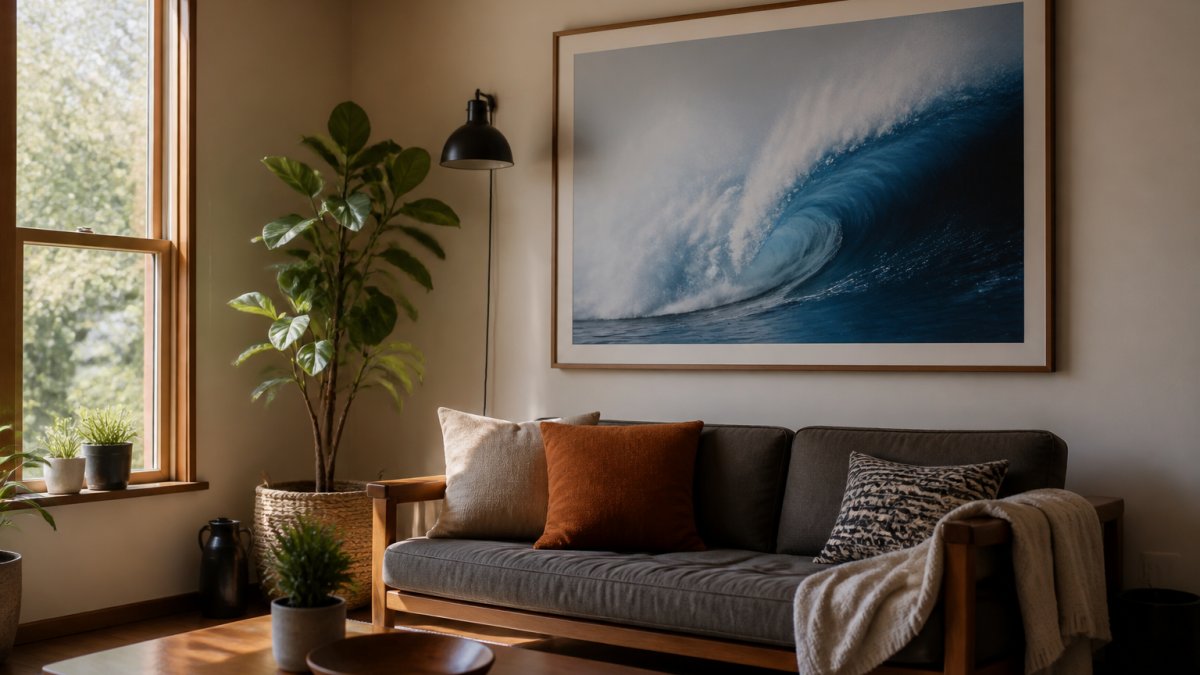
Most guides frame independent prints as a compromise, a "good enough" stand-in for real art. That misses the point: a well-made print is its own category of object, and for most rooms and budgets, the better buy.
Art Prints vs. Original Art: Understanding What You're Buying
The difference comes down to uniqueness, price, and how the piece was made: original art is one-of-a-kind, while a print is a reproduction produced in a fixed quantity or an open run.
What Counts as Original Art
Original artwork is the physical piece the artist made by hand: a painting, a drawing, a mixed-media work. There is exactly one. That singularity drives the price, and it is why originals often sit in galleries, estates, or private collections rather than on a first-time buyer's wall.
Where Prints Fit in the Market
Print reproduction splits into two types. An open edition has no fixed cap, so the artist can keep selling it. A limited edition is capped at a set number, each print usually numbered, scarcity that gives a print a shot at holding or gaining value.
| Factor | Original Art | Limited Edition Print | Open Edition Print |
|---|---|---|---|
| Quantity | One of one | Capped and numbered | Unlimited |
| Typical cost | Highest | Moderate | Lowest |
| Resale potential | Strong | Moderate | Minimal |
| Best for | Collectors | First-time collectors | Decorating on a budget |
If you want a piece that might appreciate, buy an original. For an artist's vision without the gallery markup, buy a limited edition. For something beautiful, an open edition does the job.
Limited Edition Art Prints: Exclusivity Without the Gallery Markup
A limited edition print is a reproduction capped at a fixed number of copies, each numbered and often accompanied by a certificate of authenticity. Once the run sells out, it is gone.
Gallery pricing folds rent, curation, commission, and framing into the sticker. Buying a limited edition directly from an independent artist skips most of that overhead while the edition size still creates real scarcity.
Open vs. Limited: What the Numbers Actually Mean
The distinction is structural, not marketing. An open edition has no cap: the artist can reprint indefinitely, keeping price low and availability high, but the print will almost never appreciate.
Edition size drives everything downstream. A run of 25 is genuinely scarce; a run of 500 is technically limited but functionally abundant. A larger run is fine for a beautiful object at a fair price; smaller is better if you want something that might hold interest over time.
Certificates of Authenticity and Numbering
A certificate of authenticity (COA) is a document from the artist or studio confirming the print's title, edition size, your copy number, printing method, and often the date. It is not legally required or a guarantee of value, but it is the paper trail that makes a print verifiable later.
What to look for on a COA:
- Artist name and studio
- Title of the work
- Edition size and your specific number
- Printing method and materials (paper, ink)
- Signature, either hand-signed or authorized
If a seller advertises a "limited edition" but cannot state the edition size or provide a COA, treat that as a yellow flag. Numbering without a stated cap is meaningless.
Realistic Resale Expectations
Most limited edition prints do not appreciate, the honest answer most buying guides skip. A print gains resale value only when three conditions line up: the artist's market is rising, the edition is genuinely small, and the print is in excellent condition with its COA intact.
A few practical realities:
- Open editions have essentially no resale market. Buy them to enjoy, not to invest.
- Large limited editions (hundreds of copies) rarely resell above their original price.
- Small limited editions from artists with growing followings can hold or gain value, but this is speculative and slow.
- Condition matters enormously. Foxing, fading, moisture damage, or a lost COA can wipe out most of a print's secondary value.
If you are buying primarily as an investment, a print is the wrong instrument. If you love the work and want the option of reselling later, a small numbered edition with a COA is the right structure.
Limited editions are about structure, not hype. Know the edition size, keep the certificate, and treat resale as a possibility, not a promise.
Art Print Quality and Paper Types: What Separates Good Prints from Bad
Print quality and paper types decide whether a print looks rich for decades or fades and warps within a couple of years. Paper stock and inks matter most.
Paper Weight and Finish
Paper weight is measured in grams per square meter, written as gsm. Thin paper buckles under glass; heavier stock holds flat and takes ink cleanly. Our posters use museum-grade archival paper at 175gsm, substantial enough to feel like fine art, light enough to frame without special handling. Matte finish cuts glare and reads as painterly; gloss boosts saturation but reflects light and shows fingerprints.
Inks That Last
Ink type is the quiet decider. Pigmented archival inks resist fading far better than dye-based inks, which break down under light. Ask what ink was used; if the seller cannot answer, that tells you something.
Library of Congress guidance on caring for works on paper offers practical advice on light exposure and framing that applies to any print you buy.
Hold a print at an angle under a lamp before framing. Uneven sheen or a faint banding pattern means the printer skimped on ink coverage. Good prints look consistent from every angle.
How to Choose Art Prints for Your Home
Choosing art prints for your home comes down to four decisions: scale, palette, placement, and framing. Get those right and the room pulls together. Get them wrong and even a great print looks lost.
Scale: The Two-Thirds Rule
Start with the wall, not the artwork. Measure the width of your sofa, console, or bed, then aim for a print (or grouped set) spanning roughly two-thirds to three-quarters of that width.
For a single piece over furniture, the bottom edge of the frame should sit 6 to 10 inches above the top of the sofa or headboard, close enough to feel connected, far enough to leave breathing room.
Palette: Pull, Don't Match
Match one or two tones from your existing furniture or textiles, not five. A print echoing a single color from a rug or throw reads as intentional; one that matches everything reads as busy.
If the wall faces a window, matte is almost always the better call, it softens a bright room and cuts glare.
Placement and Lighting
Hang art at eye level, typically 57 to 60 inches from the floor to the center of the piece. This is the museum standard and it works in almost every room.
Light is the quiet variable: direct sunlight fades even archival pigmented inks over years. If a wall gets strong afternoon sun, rotate the print seasonally, frame it with UV-filtering glass, or choose a different wall.
Framing Options and Presentation
Framing decides whether a print looks like fine art or a poster. Three paths:
- Custom framing, highest cost, best fit, lets you choose mat width, glass type, and frame profile. Worth it for a piece you plan to keep.
- Ready-made frames, sold in standard sizes at most craft and home retailers. Cheaper and faster, but you are limited to the sizes they stock.
- Print sizing to standard frames, the smartest move is to buy prints in standard sizes (like 18x24 or 24x36) so you can frame them off the shelf without custom costs.
A mat, the border between print and frame, adds breathing room and keeps the print off the glass, preventing moisture transfer. A 2 to 3 inch mat is a common, safe choice.
- Measure the wall or furniture first, then shop
- Match one or two existing colors, not five
- Hang at 57 to 60 inches to center
- Choose matte for bright rooms and low-glare spaces
- Buy standard sizes to avoid custom framing costs
- Add a mat to protect the print from the glass
How Much of Your Purchase Actually Reaches the Artist
A mass-produced print passes through licensing, manufacturing, distribution, and retail, each taking a cut; the artist may see a licensing fee and nothing more.
Supporting small businesses and independent artists is an economic choice, not just sentiment.
U.S. Copyright Office guidance on reproduction rights explains how reproduction rights work, which is worth understanding before you resell or reproduce any print you own.
Buying independent keeps more of your money with the maker. That is the practical difference between a print that funds an artist's next series and one that funds a distribution chain.
Buying Safely from Independent Artists Online
First, confirm the seller is real. A first-time buyer's biggest risk is not a bad print; it is a seller who never ships. Federal Trade Commission guidance on online shopping covers your rights when an order does not arrive as described.
Second, read the specs. Paper weight, ink type, edition size, and dimensions should all be stated; if the listing is vague, ask before buying.
Third, check the return policy. Prints ship flat or rolled, and damage in transit happens. A clear return or replacement policy protects you.
Fourth, look at how it ships. Flat shipping protects the surface; a rigid tube protects against creasing.
On sustainability, independent print runs are smaller than mass production, meaning less overstock and waste.
- Verify the seller has a real site and readable reviews
- Confirm paper weight, ink type, and edition size in the listing
- Read the return and replacement policy before checkout
- Prefer flat or rigid-tube shipping for larger prints
For our own catalog, every poster is made with museum-grade archival paper at 175gsm, printed with pigmented archival inks, and assembled in the USA from globally sourced parts. Pieces like our Matte Horizontal Posters and the Galactic Octopus Matte Poster are built for indoor display and framed however you like.


Frequently Asked Questions
Are art prints worth buying compared to original artwork?
Art prints offer a way to own a piece of an artist's vision at a fraction of the cost of an original. A matte poster from MobiusLDG starts at $13.38, while original paintings often sell for hundreds or thousands. Prints let you rotate your decor, try different styles, and support living artists without a major investment. They are worth buying if you value aesthetic variety, affordability, and the ability to collect multiple pieces over time.
How can I tell if an art print is good quality?
Check the paper weight and ink type. Museum-grade archival paper like 175gsm fine art paper resists yellowing and holds color well. Pigmented archival inks are fade-resistant and produce vibrant, accurate reproductions. If the listing mentions archival materials and specific paper weight, that is a strong signal of quality.
What is the difference between an art print and a limited-edition print?
An open-edition art print can be reproduced indefinitely, while a limited-edition print has a fixed run size, often numbered and signed by the artist. Limited editions may come with a certificate of authenticity and tend to hold resale value better. Open editions are more affordable and accessible. Both support the artist, but limited editions add a layer of exclusivity and collecting potential.
Does buying art directly from an artist support them more?
Yes. When you buy from an independent artist or a small brand like MobiusLDG, a larger share of the sale goes to the creator. Marketplaces and galleries take commissions that can range from 30% to 50%, reducing what the artist earns. Direct purchases cut out those middlemen, so more of your money reaches the person who made the work. This helps artists continue creating and reinvesting in their craft.