

Table of Contents
- Why Shoppers Look for a Woosah Alternative for Artistic Apparel
- What Defines Artistic Apparel in 2026
- Independent Graphic Apparel Brands Worth Knowing
- Price-to-Quality: What You Actually Pay For
- Sourcing and Supply Chain Transparency
- Unique Gift Ideas for Art Lovers
- Matching the Aesthetic to Your Style
- Conclusion
- Frequently Asked Questions
Last Updated: September 26, 2026
Why Shoppers Look for a Woosah Alternative for Artistic Apparel
Shoppers search for a Woosah alternative for artistic apparel because they want hand-carved graphics, small-batch production, and designs that feel personal rather than mass-produced. This guide from MobiusLDG breaks down what separates one artistic apparel brand from another.
Many buyers want the same artisan-crafted feel with more variety, better fit options, and clearer sourcing.
Below, we'll show you how to evaluate an artistic apparel brand and what price-to-quality really looks like.
What Defines Artistic Apparel in 2026
Artistic apparel is clothing where the design itself, not the logo, carries the value: original artwork, a visible printmaking method, and production that respects the maker and the material.
The category has shifted. A few years ago, "artistic" meant a bold graphic on a standard tee. Now buyers ask harder questions: Who drew this? How was it printed? Will it survive fifty washes?
Printmaking Roots and Hand-Carved Graphics
Hand-carved graphics come from linocut, woodblock, and screen-printing traditions where the artist cuts the image by hand. You can spot the difference: slight irregularities in line weight, texture in the ink, edges that aren't perfectly uniform.
That imperfection is the point. Digital printing reproduces an image exactly, every time; hand-carved printmaking leaves the mark of the tool, which makes a piece feel like artwork you can wear.
For buyers, this matters practically. Ask any brand how their graphics are made. A vague answer usually means digital-only production.
Nature-Inspired Design and Slow Fashion
Nature-inspired design draws from botanicals, animals, landscapes, and organic forms. Slow fashion is the production philosophy behind it: smaller runs, less waste, and no race to drop new designs weekly.
Combined, they create apparel that ages well rather than chasing trends, the core of what draws people away from fast-fashion graphic tees.
Independent Graphic Apparel Brands Worth Knowing
The strongest independent graphic apparel brands share three traits: original artwork, transparent production, and a defined aesthetic. Here's how to sort them.
MobiusLDG describes its pieces as "artfully cast from dreams," and the catalog backs that up with distinctive, dream-like designs across tees, prints, and accessories. What separates MobiusLDG is the curation: every item carries a consistent artistic identity rather than a random mix of trending graphics, a wardrobe that reads as a single creative vision.
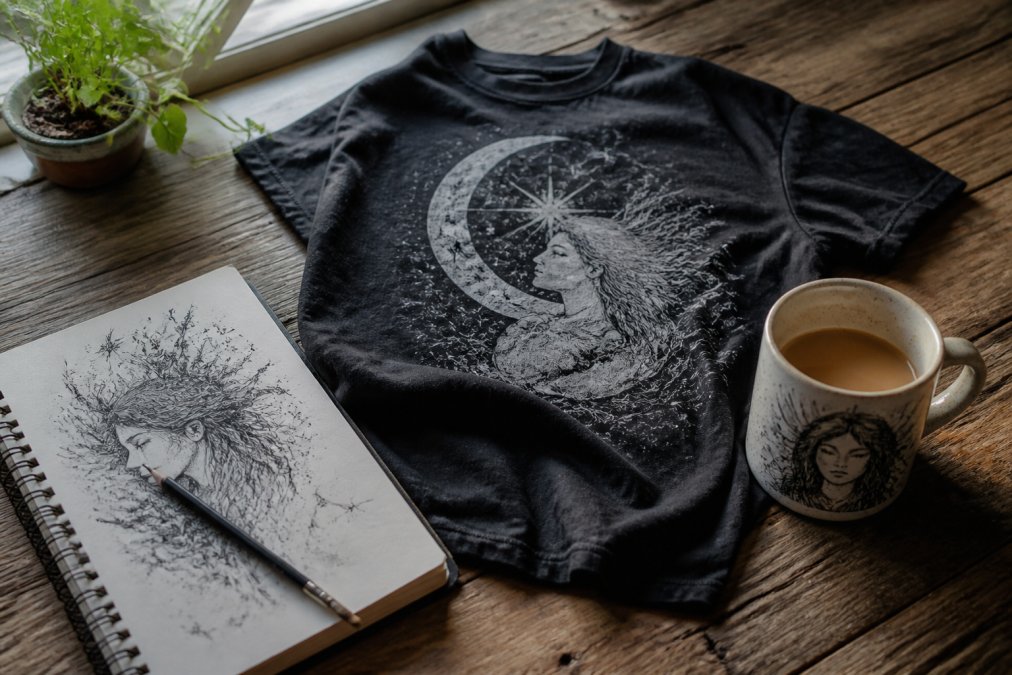
The pattern across all of them: the artist is visible, and the production method is stated.
Price-to-Quality: What You Actually Pay For
Paying more for artistic apparel only makes sense when you can name what the extra cost buys: original artwork, better textile quality, and smaller production runs.
Here's how the price tiers typically break down:
| Price Tier | What You're Paying For | Typical Print Method | Expected Lifespan |
|---|---|---|---|
| Budget graphic tees | Blank + stock design | Digital transfer | Fades within a year |
| Mid-range artistic apparel | Original design, decent blank | Screen print | Several years |
| Premium artisan-crafted | Original artwork, heavy textile, small run | Hand-carved or screen print | Many years |
A common mistake is assuming price alone signals quality. A higher price with a digital transfer print and a thin blank is worse value than a mid-priced tee with a hand-carved screen print on heavyweight cotton.
What most guides miss is the restock question. Small-batch production means items sell out and may not return. If you love a design, buy it when you see it.
15oz Black Mug — Blue & Gold Mosaic →
Sourcing and Supply Chain Transparency
Supply chain transparency means a brand can tell you where its blanks come from, who prints the designs, and how workers are treated. Ethical manufacturing is the outcome, but "ethical" is a word any brand can print on a hangtag, so the useful question is which claims are third-party backed and which are self-reported.
This is where the artistic apparel category separates sharply. Some brands publish full sourcing details and certification numbers; others say nothing.
The Certifications That Actually Mean Something
A brand that has done the work usually has paperwork to show for it. These are the standards most commonly cited by small-batch apparel makers:
- Global Organic Textile Standard (GOTS), covers organic fiber content plus environmental and social criteria across the whole supply chain, not just the farm. A GOTS claim is one of the few that reaches the dyehouse and the cut-and-sew floor.
- OEKO-TEX Standard 100, tests the finished garment for harmful substances. It says nothing about labor conditions, so treat it as a fabric-safety claim, not an ethics claim.
- Fair Trade Certified, applies to factories and farms and includes a premium paid back to workers. Common on cotton-heavy basics.
- bluesign, a textile-production standard focused on chemical and resource use. You'll see it most on performance and outdoor fabrics.
- B Corp Certification, a whole-company governance and impact assessment, not a product claim. It signals how the business is run rather than how one tee was made.
How to Read a Sourcing Page in Two Minutes
Most transparency pages bury the useful facts. Scan for five items in order:
- Fiber content and weight. "100% cotton" is not enough, look for organic cotton, recycled cotton, or a named blend, plus a fabric weight in oz/yd² (a 6.0 oz tee is a heavyweight; a 4.2 oz tee is a standard retail blank).
- Mill or blank supplier. Named mills and named blank brands are verifiable. "Premium fabric" is not.
- Print or dye location. Domestic printing and overseas printing carry different labor and environmental profiles, and the brand should say which it uses.
- Certification numbers. GOTS and OEKO-TEX certificates carry ID numbers you can look up in the issuing body's public database. A logo without a number is decoration.
- Run size. Small-batch production is a sustainability claim in itself, fewer units made means less deadstock, so a stated run size is a transparency signal, not just a scarcity tactic.
GOTS public certified-supplier database
Unique Gift Ideas for Art Lovers
Unique gift ideas for art lovers work best when the item is useful and visually distinctive. A wearable graphic or functional art object beats a decorative piece that sits in a drawer.
Matching the Aesthetic to Your Style
Not every artistic design will fit your wardrobe, and that's fine. The goal is matching the aesthetic to how you actually dress, not collecting the boldest graphics you can find. Most guides stop at "pick what you like." This one gives you a scoring method, because the real failure mode isn't bad taste, it's buying a statement piece you wear twice.
Step 1: Score Your Baseline Wardrobe
Answer each question and keep a running total. This takes about a minute.
- How many colors are in your average outfit? One or two (+1) · Three or four (+2) · Five or more (+3)
- Where does most of your clothing come from? Big-box basics (+1) · A mix of basics and indie labels (+2) · Mostly small-batch or vintage (+3)
- How do you feel about visible texture or imperfection in a print? Prefer clean and uniform (+1) · Neutral (+2) · Actively like the irregularity (+3)
- How often do you layer? Rarely (+1) · Sometimes (+2) · Almost always (+3)
- How do you buy? One piece at a time, on impulse (+1) · Planned purchases (+2) · I build around a single aesthetic (+3)
5-8 points: Minimalist. 9-12 points: Adaptive. 13-15 points: Maximalist.
Step 2: Match the Score to a Print Style
This is where the printmaking method from earlier in this guide becomes a shopping filter, not trivia.
Step 3: Buy One Piece, Then Reassess
If you're coming from a conservative wardrobe, start with one piece: a tee with a small, tonal graphic. Wear it a few times before committing to a bolder design. Most people find the subtle version gets worn far more often, the actual test of whether a piece belongs in your rotation.
Conclusion
The hardest part of finding a Woosah alternative for artistic apparel isn't the search. It's trusting that a smaller brand will deliver artwork worth wearing and a product that actually shows up.
Frequently Asked Questions
How do I find clothing brands similar to Woosah Outfitters?
Start with brands that lead with original artwork rather than licensed graphics. Look for hand-carved graphics, woodblock prints, or nature-inspired designs, and check whether the brand names its printmaking process. MobiusLDG, for example, describes its pieces as artfully cast from dreams, so you can see the artistic intent before you buy.
What are the best independent graphic apparel brands for art lovers?
The strongest options are brands that treat apparel design as an art practice. MobiusLDG sits in this space with graphic tees, apparel accessories, and art pieces that share one visual identity.
Are there sustainable alternatives to mainstream graphic apparel brands?
Yes. Sustainable fashion alternatives usually combine on-demand production, small-batch runs, and ethical manufacturing partners. Ask brands where garments are printed and whether they use water-based inks, then check if they publish sourcing details. Slow fashion labels often cost more per piece because runs are smaller and textile quality is higher. That trade-off is the core of the price-to-quality gap between mass-market tees and artisan-crafted apparel.
How can I verify the quality of independent artistic clothing brands?
Check three things: the printing method, the fabric weight, and the return policy. Brands that explain their process, such as hand-carved graphics or water-based screen printing, are easier to trust than ones that only show styled photos. Look for reviews mentioning wash durability, and confirm the brand restocks or offers exchanges. MobiusLDG's 15oz Black Mug with Blue & Gold Mosaic Women Art, priced at $20.99, is a low-risk way to test a brand's print and finish quality before buying apparel.