

Table of Contents
- What Makes a Wearable Art Shop Worth Buying From
- How We Evaluated These Wearable Art Shop Alternatives
- Independent Artist Clothing Brands: A Curated Comparison
- Handmade Wearable Art Fashion: Materials and Craftsmanship
- Unique Gift Ideas for Art Lovers: Statement Pieces That Work
- Sizing, Fit, and Styling for Independent Designer Pieces
- Investment Value and Resale in Wearable Art
- Conclusion
- Frequently Asked Questions
Last Updated: September 16, 2026
What Makes a Wearable Art Shop Worth Buying From
A wearable art shop earns its keep when the garment construction, print method, and sourcing story all hold up under scrutiny, not just the thumbnail. This guide from MobiusLDG breaks down what separates a genuine artist-designed piece from a drop-shipped graphic tee.
The category has exploded. Independent designers now sell direct through small storefronts, which means the old wholesale filter is gone. You are the filter now. That cuts both ways: more original artwork reaches the market, and more low-effort resellers dress up stock designs as exclusive collections.
So what actually distinguishes a serious shop? Three things, and they are testable before you spend a dollar.
Print method. Direct-to-garment printing lays ink into the fabric rather than on top of it. Look for that term, or DTG, in the product description. Screen-printed and heat-pressed transfers sit on the surface and are the ones that crack and fade first.
Fiber content. Airlume combed and ringspun cotton feels smoother and holds shape longer than standard carded cotton. When a listing names the fiber and the fabric weight in ounces per square yard, the seller knows the supply chain.
Production model. Printed-on-demand means no warehouse full of unsold inventory, which is the honest version of slow production. Art-to-wear labels that print to order rarely overproduce.
How to Verify Authenticity and Ethical Production
Verification is a paperwork exercise, and most shoppers skip it. Start with the artist's name. A real independent label credits the human behind the design, and you can usually trace that person to a portfolio, a print series, or a video showing the work being made.
Then check the claims themselves. If a shop says ethical production, look for specifics: which printing partner, which fabric mill, which certification. Vague language is a signal, not a reassurance. The Federal Trade Commission's guidance on environmental marketing claims sets the standard for how green claims must be substantiated, and it is worth knowing before you trust a label.
Finally, look at the garment spec sheet. Ribbed knit collars, taped shoulders, and dual side seams are construction details that cost the maker more money. A shop that lists them is telling you where the budget went.
How We Evaluated These Wearable Art Shop Alternatives
Every piece below was assessed on five criteria: print method, fabric specification, construction details, design originality, and price transparency.
Price transparency mattered more than absolute price.
We also favored pieces with a traceable artist credit. Lincoln Gardner's work anchors most of this catalog, which means the visual storytelling is consistent across designs rather than a random grab bag of clip art.
Independent Artist Clothing Brands: A Curated Comparison
Independent artist clothing brands live or die on two things: whether the artwork is genuinely theirs and whether the blank they print on is worth wearing. Here is how the strongest options in this catalog stack up.
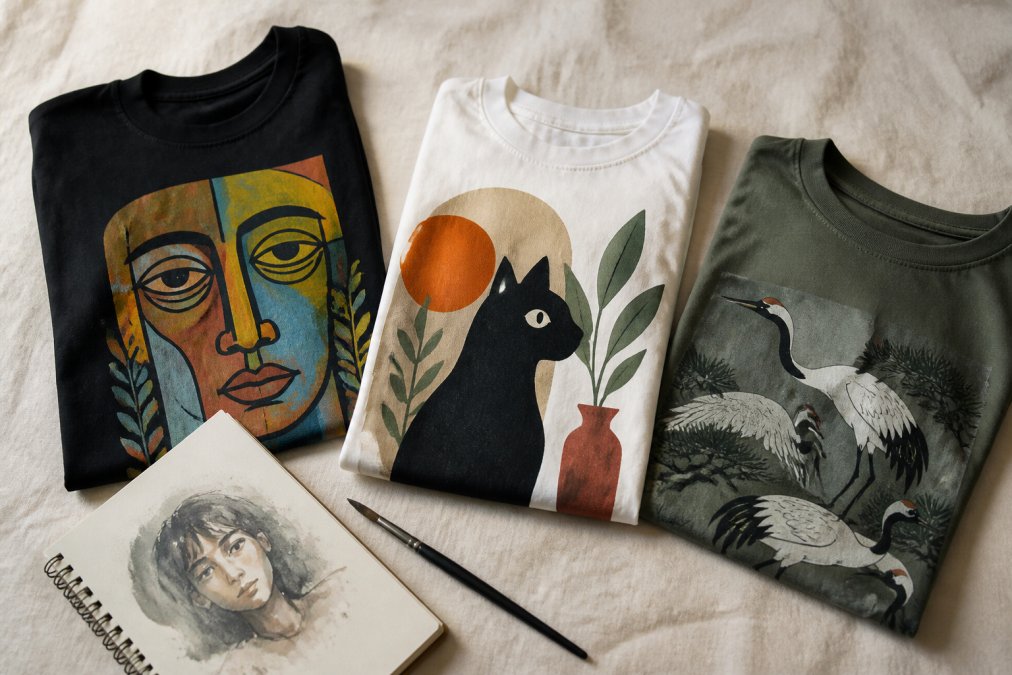
| Piece | Price | Fabric | Fit | Best For |
|---|---|---|---|---|
| Dancing Geo Tee | $27.73 | 100% Airlume cotton, 4.2 oz | Retail, true to size | Everyday statement wear |
| Cross Eyed Kitty Tee | $11.37 | 100% Airlume cotton, 4.2 oz | Retail, true to size | Budget gift for cat lovers |
| Abstract Art Garment-Dyed Tee | $43.83 | 100% ring-spun cotton, 6.1 oz | Relaxed, oversized | Texture-first minimalists |
Dancing Geo Unisex Jersey Short Sleeve Tee
The Dancing Geo print sits on the back, which makes it a conversation piece rather than a billboard, and the blank is genuinely well made: ribbed knit collar, taped shoulders, dual side seams.

It runs true to size in a retail fit, so order your normal size. At $27.73 it keeps the construction spec honest.
Pros: Back print placement, taped shoulders, true-to-size fit, mid-range price. Cons: Back-only print means the front is plain, which some buyers find underwhelming.
Dancing Geo Unisex Jersey Short Sleeve →
Cross Eyed Kitty Unisex Jersey Tee
The entry point to the catalog. At $11.37 it is the lowest-priced piece here, printed on the same Airlume combed and ringspun cotton blank with a tear-away label and sizes running S through 3XL.
The artwork is pop-art bright, which makes it a natural fit for pet owners and anyone building a casual, colorful wardrobe. Where it falls short: at this price the print is the entire value proposition, so if you want heavier fabric or an oversized cut, look elsewhere.
Abstract Art Unisex Garment-Dyed T-shirt
The premium pick. Comfort Colors garment-dyes a 100% ring-spun cotton blank at 6.1 oz per square yard, then soft-washes it, so the fabric arrives already broken in. The relaxed, oversized cut and the lack of side seams let it hold a tubular shape instead of twisting.
Handmade Wearable Art Fashion: Materials and Craftsmanship
Handmade wearable art fashion is defined by the materials and the construction choices behind it, not by a rustic aesthetic. The relevant question is whether the maker specified the fabric, the weight, and the print method.
Unique Gift Ideas for Art Lovers: Statement Pieces That Work
Unique gift ideas for art lovers usually fail for one reason: the giver picks something they love and the recipient never wears it. The fix is to match the piece to the person's existing wardrobe rather than to your own taste.
Sizing, Fit, and Styling for Independent Designer Pieces
Sizing is the single biggest friction point when buying from independent designers, because there is no universal standard across small labels. The workaround is to read the fit descriptor, not the size label.
Styling follows from the cut:
- Retail fit tees tuck cleanly and work under a blazer for a professional setting.
- Relaxed, oversized tees look best half-tucked or worn loose over straight-leg denim for casual wear.
- Back-print designs pair well with plain-front layers, since the artwork does the talking behind you.
Investment Value and Resale in Wearable Art
Treating a graphic tee as an investment is a stretch, but limited-edition and artist-designed pieces can hold value.
What actually drives resale value in this category:
- Artist reputation. Work tied to a named artist with a visible portfolio resells better than anonymous designs.
- Print longevity. A piece that still looks new after two years sells; a cracked print does not.
- Documented production. Buyers pay more when they can verify the fabric and the print method.
Conclusion
Check the print method, read the fabric weight, and look for a named artist.
Frequently Asked Questions
What is considered wearable art in modern fashion?
Wearable art is clothing or accessories where the artistic design is the main feature, not an afterthought. It includes hand-printed tees, limited-edition textile pieces, and garments made by independent designers using original artwork. A wearable art shop typically sells pieces with visible craftsmanship, such as the Dancing Geo Unisex Jersey Short Sleeve Tee at $27.73, which uses dual side seams and taped shoulders to hold its shape. The key difference from standard graphic apparel is that each design originates from an artist's body of work, not a mass-market template.
How do I find independent artist clothing brands online?
Start by looking for shops that credit the artist by name and show the original artwork alongside the garment. Check whether the product page explains the printing method, fabric weight, and production process. Independent artist clothing brands often print on demand, which means sizes S-3XL stay available without overstock. Look for specific fabric details like 100% Airlume combed and ringspun cotton or garment-dyed ring-spun cotton, since these signal a higher base blank than generic wholesale tees.
What should I look for when buying high-quality wearable art?
Check four things: fabric weight, print method, construction, and artist attribution. A 4.2 oz/yd² light fabric suits warm weather, while a 6.1 oz/yd² medium fabric like the Abstract Art Unisex Garment-Dyed T-shirt at $43.83 gives a heavier, relaxed feel. Look for direct-to-garment printing, ribbed knit collars, taped shoulders, and double-needle stitching. If the listing names the artist and links to the original work, you are buying from a real creative source rather than a reseller using stock images.
Are there sustainable alternatives to mass-produced wearable art?
Yes. Print-on-demand production is one of the most practical alternatives because garments are made only after an order is placed, which reduces deadstock waste. Shops that use garment-dyed cotton and ringspun cotton also tend to produce softer, longer-lasting pieces that people keep instead of replacing each season. Ask whether the shop discloses its printing partner and fabric sourcing. A wearable art shop that publishes these details is usually more transparent about ethical production than one that only shows product photos.
How does wearable art differ from standard graphic apparel?
Standard graphic apparel usually starts with a trend or slogan and finds a design to fit it. Wearable art starts with an artist's original work and builds the garment around it. That changes what you get: unique silhouettes, limited-edition runs, and designs tied to a specific creative project. For example, the Bailadora Tee at $20.05 uses the same artwork as a 16x20 print, so the shirt functions as a wearable version of a gallery piece rather than a logo carrier.